
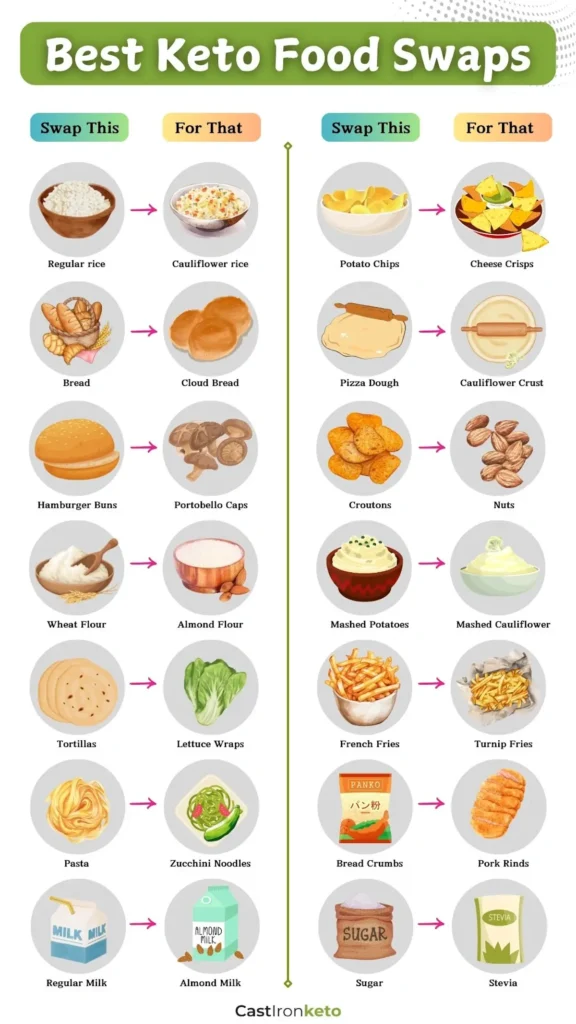
From High-Carb to Low-Carb: The Best Keto Food Swaps to Try Today
The ketogenic diet, or keto diet, has gained popularity in recent years as a way to lose weight and improve overall health. This high-fat, low-carb diet has been shown to help with weight loss, blood sugar control, and even improve brain function. However, transitioning from a high-carb diet to a low-carb ketogenic diet can be challenging, especially when it comes to finding suitable food swaps.
In this article, we will discuss some of the best keto food swaps to try today to help you make the transition to a low-carb lifestyle. We will also address some frequently asked questions about the ketogenic diet to help you understand the benefits and potential pitfalls of this eating plan.
The Basics of the keto diet
Before we delve into the best keto food swaps, let’s first discuss the basics of the ketogenic diet. The keto diet is a high-fat, moderate-protein, low-carb eating plan that aims to put your body into a state of ketosis. Ketosis is a metabolic state in which your body burns fat for fuel instead of carbohydrates.
To achieve ketosis, you need to drastically reduce your carb intake and increase your fat intake. The typical macronutrient breakdown of a ketogenic diet is 70-75% fat, 20-25% protein, and 5-10% carbs. This means that you should focus on consuming healthy fats such as avocados, olive oil, and nuts, along with moderate amounts of protein and very few carbohydrates.
When following a ketogenic diet, it’s essential to choose nutrient-dense, whole foods and avoid processed, high-carb foods. This is where food swaps come in handy, as they can help you replace high-carb staples in your diet with low-carb alternatives that are keto-friendly.
Best Keto Food Swaps to Try Today
1. Cauliflower Rice Instead of White Rice
One of the most common high-carb foods people consume is white rice. While rice is a staple in many diets, it is high in carbohydrates and can hinder ketosis. A great alternative to white rice is cauliflower rice, which is made by grating cauliflower into small, rice-like pieces.
Cauliflower rice is low in carbs and calories, making it an excellent substitute for white rice on a ketogenic diet. You can use cauliflower rice in recipes that call for rice, such as stir-fries, pilafs, and fried rice. It’s a versatile ingredient that can help you stay on track with your low-carb lifestyle.
2. Zucchini Noodles Instead of Pasta
Pasta is another high-carb food that is off-limits on a ketogenic diet. Fortunately, there is a delicious alternative that can satisfy your pasta cravings without the carbs: zucchini noodles, also known as zoodles.
Zucchini noodles are made by spiralizing zucchini into long, pasta-like strands. They can be used in place of traditional pasta in dishes like spaghetti and meatballs, fettuccine Alfredo, and pad Thai. Zucchini noodles are low in carbs and calories, making them a great option for keto dieters.
3. Lettuce Wraps Instead of Bread
Bread is a major source of carbs in many diets, so finding a suitable replacement is crucial for keto dieters. Lettuce wraps are a great alternative to bread when it comes to sandwiches, burgers, and wraps.
Lettuce wraps are low in carbs and calories, making them an ideal choice for those following a ketogenic diet. You can use large lettuce leaves, such as romaine or butter lettuce, to wrap up your favorite fillings, such as deli meats, cheese, and avocado. Lettuce wraps are a refreshing and crunchy alternative to bread that can help you stay on track with your low-carb goals.
4. Coconut Flour Instead of Wheat Flour
Wheat flour is a staple in many baked goods, but it is high in carbs and not suitable for a ketogenic diet. Coconut flour is a great alternative to wheat flour that is low in carbs and high in fiber.
Coconut flour can be used in place of wheat flour in recipes for pancakes, muffins, cookies, and bread. It has a slightly sweet flavor and a light, airy texture that works well in baked goods. Coconut flour is also gluten-free, making it a suitable option for those with gluten sensitivities.
5. Avocado Oil Instead of Vegetable Oil
Vegetable oils such as canola, soybean, and corn oil are commonly used in cooking, but they are high in inflammatory omega-6 fats and not recommended on a ketogenic diet. Avocado oil is a healthier alternative that is rich in monounsaturated fats and antioxidants.
Avocado oil has a high smoke point, making it ideal for cooking at high temperatures. You can use avocado oil in place of vegetable oil in recipes for sautéing, frying, and roasting. It has a mild flavor that won’t overpower other ingredients and is a heart-healthy option for keto dieters.
6. Almond Flour Instead of Breadcrumbs
Breadcrumbs are often used as a coating for fried foods or as a binder in meatballs and meatloaf. Unfortunately, breadcrumbs are high in carbs and not suitable for a ketogenic diet. Almond flour is a great alternative that is low in carbs and high in healthy fats.
Almond flour can be used in place of breadcrumbs in recipes for fried chicken, fish, and vegetables. It adds a nutty flavor and a crunchy texture that is similar to traditional breadcrumbs. Almond flour is also gluten-free, making it a suitable option for those with gluten sensitivities.
7. Greek Yogurt Instead of Regular Yogurt
Regular yogurt is a popular breakfast food, but it is high in carbs and sugars that can derail your ketogenic diet. Greek yogurt is a better alternative that is lower in carbs and higher in protein.
Greek yogurt has a thick, creamy texture and a tangy flavor that pairs well with fruits, nuts, and seeds. You can use Greek yogurt in place of regular yogurt in recipes for smoothies, parfaits, and dips. It is a satiating option that can help you stay full and satisfied on a low-carb diet.
8. Pork Rinds Instead of Potato Chips
Potato chips are a common snack food that is high in carbs and unhealthy fats. Pork rinds are a crunchy, savory alternative that is low in carbs and high in protein.
Pork rinds are made from fried pork skin and can be seasoned with a variety of flavors, such as barbecue, salt and vinegar, and sour cream and onion. They are a satisfying snack that can help you curb your cravings for crunchy, salty foods. Pork rinds are a keto-friendly option that can be enjoyed in moderation on a low-carb diet.
9. Cacao Nibs Instead of Chocolate Chips
Chocolate chips are a popular ingredient in baked goods, but they are high in sugar and not suitable for a ketogenic diet. Cacao nibs are a healthier alternative that is made from crushed cacao beans and has a rich, chocolatey flavor.
Cacao nibs can be used in place of chocolate chips in recipes for cookies, brownies, and granola bars. They add a crunchy texture and a bittersweet taste that is perfect for desserts. Cacao nibs are also packed with antioxidants and magnesium, making them a nutritious option for keto dieters.
10. Sparkling Water Instead of Soda
Soda is a sugary beverage that is high in carbs and calories. Sparkling water is a refreshing alternative that is sugar-free and can help you stay hydrated on a ketogenic diet.
Sparkling water comes in a variety of flavors, such as lemon, lime, and berry, and can be enjoyed on its own or mixed with a splash of juice or a slice of fruit. It is a bubbly, satisfying drink that can help you kick your soda habit and stay on track with your low-carb goals.
FAQs About the Ketogenic Diet
Q: What are the benefits of a ketogenic diet?
A: The ketogenic diet has been shown to help with weight loss, blood sugar control, and improved brain function. It can also reduce inflammation, lower cholesterol levels, and improve energy levels. Many people find that they feel more satiated and less hungry on a ketogenic diet, which can lead to better food choices and improved overall health.
Q: Are there any potential pitfalls of a ketogenic diet?
A: While the ketogenic diet can be beneficial for many people, there are some potential pitfalls to be aware of. Some people may experience symptoms of the “keto flu,” such as fatigue, headaches, and irritability, when first starting the diet. It’s also important to make sure you are getting enough nutrients, such as fiber, vitamins, and minerals, on a ketogenic diet. Consulting with a healthcare provider or registered dietitian can help you navigate the potential pitfalls of a ketogenic diet.
Q: How can I make sure I am getting enough fiber on a ketogenic diet?
A: Fiber is an essential nutrient that helps with digestion, blood sugar control, and weight management. While many high-fiber foods are off-limits on a ketogenic diet, there are still ways to ensure you are getting enough fiber. Foods such as avocados, nuts, seeds, and low-carb vegetables like broccoli, spinach, and kale are good sources of fiber that can be included in a ketogenic diet. You can also consider adding a fiber supplement, such as psyllium husk or flaxseed, to your diet to help meet your fiber needs.
Q: Can I follow a ketogenic diet if I am vegetarian or vegan?
A: Yes, it is possible to follow a ketogenic diet if you are vegetarian or vegan. While many ketogenic diets focus on animal-based proteins such as meat, poultry, and fish, there are plenty of plant-based sources of protein and healthy fats that can be included in a vegetarian or vegan ketogenic diet. Foods such as tofu, tempeh, seitan, nuts, seeds, and plant-based oils like coconut oil and avocado oil can be incorporated into a vegetarian or vegan ketogenic diet. Consulting with a registered dietitian can help you create a balanced, plant-based ketogenic meal plan.
Q: How long does it take to see results on a ketogenic diet?
A: The time it takes to see results on a ketogenic diet can vary depending on your individual metabolism, activity level, and adherence to the diet. Some people may experience weight loss and increased energy within a few weeks of starting a ketogenic diet, while others may take longer to see results. It’s important to be patient and consistent with your diet and lifestyle changes to give your body time to adjust and reap the benefits of a ketogenic diet.
In conclusion, transitioning from a high-carb diet to a low-carb ketogenic diet can be challenging, but with the right food swaps and knowledge, it is possible to make the switch successfully. By incorporating keto-friendly alternatives such as cauliflower rice, zucchini noodles, and avocado oil into your diet, you can enjoy delicious, satisfying meals that support your low-carb goals. Remember to consult with a healthcare provider or registered dietitian before starting a ketogenic diet to ensure it is safe and appropriate for your individual needs. With dedication and persistence, you can achieve your health and weight loss goals on a ketogenic diet and enjoy the many benefits of this eating plan.