

How Fast Does Ozempic Work for Weight Loss? Timeline and Side Effects
If you have just been prescribed a semaglutide medicine, or you are thinking about asking about one, the first questions are usually the same: how long until it works, and what will it feel like? Here is a plain-language overview of what to expect. It is general information, not medical advice, and your prescriber’s guidance always comes first.
In this article (5 sections)
Ozempic and Wegovy: what is the difference?
Both contain semaglutide, a medicine that mimics the gut hormone GLP-1. Ozempic is approved in the US for adults with type 2 diabetes. Wegovy is the semaglutide brand approved for chronic weight management in people who meet weight and health criteria. Many people say “Ozempic” when they mean any semaglutide medicine, and some prescribers use Ozempic off-label for weight loss. Which one you are offered depends on your health, your prescriber and your insurance.
How fast does it start working?
Some people notice less hunger and earlier fullness within the first few weeks, but the scale usually moves gradually. Treatment starts with a low dose that is increased step by step over several weeks. This is mainly to let your body adjust and limit side effects, so the early doses are not expected to deliver the full effect. Most of the weight change in clinical trials built up over many months, not days.
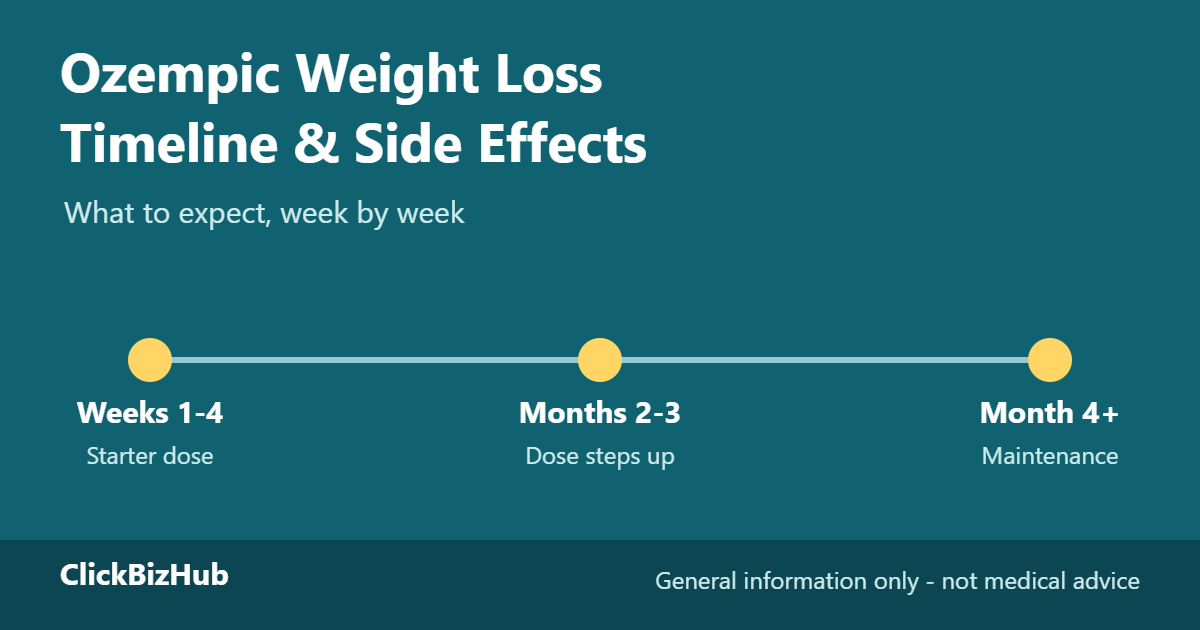
- Weeks 1 to 4: starter dose. Appetite changes are common, and so are mild stomach side effects.
- Months 2 to 3: dose is stepped up if tolerated. Steadier weight loss often begins here.
- Month 4 and beyond: results depend on the maintenance dose, food choices, activity, sleep and the individual.
Results vary widely. Some people lose a lot, some lose little, and a few stop because of side effects. Ask your prescriber what progress to expect for you.
Common side effects
The most commonly reported effects involve the digestive system and tend to be strongest after starting or increasing a dose:
- Nausea
- Vomiting
- Diarrhea or constipation
- Stomach pain or bloating
- Tiredness
Smaller meals, eating slowly, limiting very fatty or greasy food and staying hydrated help many people. Dehydration from vomiting or diarrhea can strain the kidneys, so do not ignore persistent symptoms.
When to contact a doctor
Seek medical advice promptly for severe or lasting stomach pain (which can signal pancreatitis or gallbladder problems), repeated vomiting, signs of dehydration, vision changes, or symptoms of low blood sugar if you also use insulin or similar diabetes medicines. Semaglutide medicines also carry a boxed warning about a possible risk of thyroid tumors seen in animal studies, and they are not suitable for people with certain personal or family histories. Always go through your full history with your prescriber.
Getting more from treatment
Medicine works best alongside habits you can keep: enough protein, strength training to protect muscle, regular walking and good sleep. See our guides on protein, strength training and walking for weight loss.
Medical disclaimer: This article is for information only and is not medical advice. Talk to your doctor or pharmacist before starting, changing or stopping any medicine. See our medical disclaimer.