
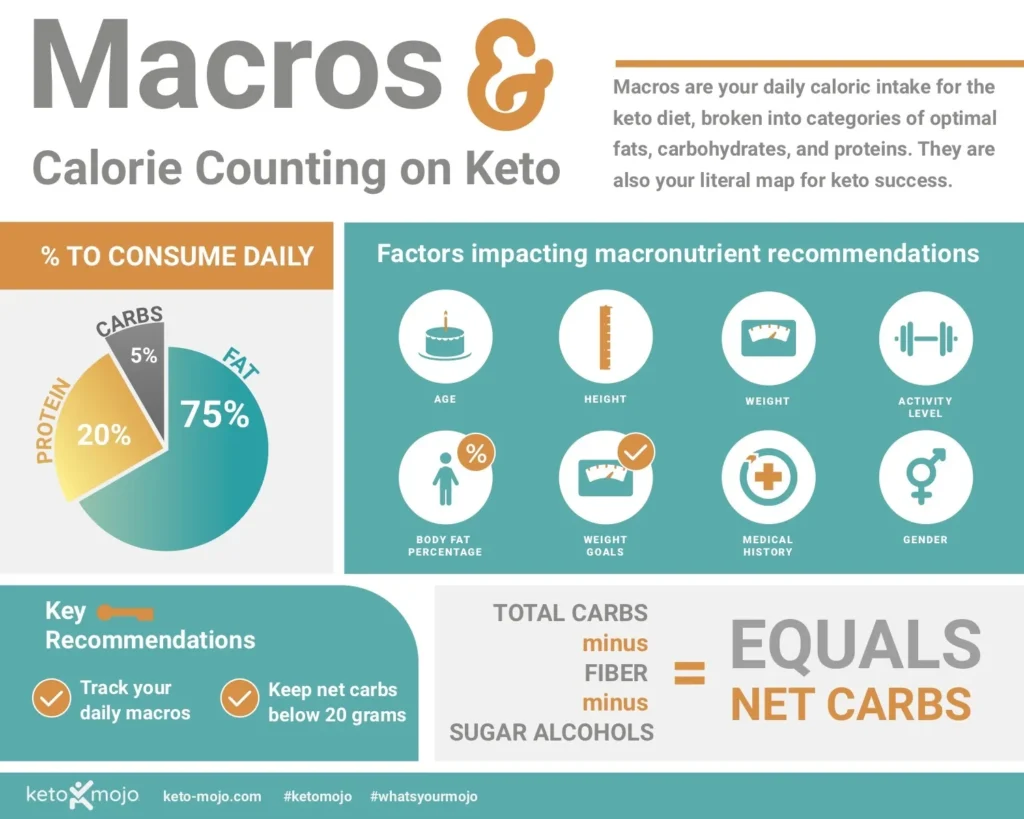
Calorie counting is a key component of any successful keto diet plan. The ketogenic diet is a high-fat, low-carb eating plan that has gained popularity in recent years for its ability to help people lose weight and improve their overall health. By tracking your calorie intake on keto, you can ensure that you are consuming the right amount of calories to achieve your weight loss goals while still maintaining ketosis.
In this article, we will discuss why calorie counting is important for keto success, how to determine your calorie needs on keto, and provide some frequently asked questions about calorie counting on a ketogenic diet.
Why Calorie Counting is Important for Keto Success
Calorie counting is important on the keto diet because it helps you to stay on track with your weight loss goals. While the ketogenic diet is known for its ability to promote weight loss through the process of ketosis, it is still essential to consume the right amount of calories to see results.
When you consume too many calories on keto, your body will not be able to burn off excess fat stores, which can lead to weight gain or stalled weight loss. Conversely, if you consume too few calories, your body may go into starvation mode, slowing down your metabolism and making it harder to lose weight.
By tracking your calorie intake on keto, you can ensure that you are eating the right amount of calories for your body’s needs. This can help you to achieve your weight loss goals more efficiently and effectively.
How to Determine Your Calorie Needs on Keto
To determine your calorie needs on the ketogenic diet, you will first need to calculate your basal metabolic rate (BMR). Your BMR is the number of calories your body needs to maintain basic bodily functions, such as breathing and circulating blood, at rest.
There are several formulas available online that can help you calculate your BMR based on factors such as your age, gender, weight, and height. Once you have determined your BMR, you can then factor in your activity level to determine your total daily energy expenditure (TDEE).
Your TDEE is the number of calories you need to consume each day to maintain your current weight. To lose weight on keto, you will need to create a calorie deficit by consuming fewer calories than your TDEE. A common recommendation is to aim for a calorie deficit of 500-1000 calories per day to lose 1-2 pounds per week.
It is important to note that calorie needs can vary from person to person, so it may take some trial and error to determine the right amount of calories for you on keto. It is also important to listen to your body’s hunger cues and adjust your calorie intake as needed to ensure that you are meeting your nutritional needs while still achieving your weight loss goals.
Frequently Asked Questions about Calorie Counting on Keto
Q: Do I need to count calories on the ketogenic diet?
A: While some people on the ketogenic diet may be able to see results without counting calories, tracking your calorie intake can help you to stay on track with your weight loss goals and ensure that you are consuming the right amount of calories for your body’s needs.
Q: How do I track my calorie intake on keto?
A: There are several apps and websites available that can help you track your calorie intake on the ketogenic diet. Some popular options include MyFitnessPal, Cronometer, and Carb Manager. These apps allow you to log your food intake and track your macronutrient and calorie consumption.
Q: How many calories should I eat on keto?
A: The number of calories you should eat on the ketogenic diet will depend on factors such as your age, gender, weight, height, and activity level. It is recommended to calculate your BMR and TDEE to determine your calorie needs on keto and create a calorie deficit to lose weight.
Q: Can I eat as many calories as I want on keto as long as I stay within my carb limit?
A: While the ketogenic diet allows for more flexibility in terms of calorie consumption compared to other diets, it is still important to pay attention to your calorie intake to achieve your weight loss goals. Consuming too many calories, even if they are from keto-friendly foods, can hinder your weight loss progress.
Q: How can I make calorie counting easier on keto?
A: To make calorie counting easier on the ketogenic diet, try meal planning and prepping your meals in advance. This can help you to stay on track with your calorie goals and make healthier food choices throughout the day. Additionally, using a food scale to measure your portions can help you to accurately track your calorie intake.
In conclusion, calorie counting is key to keto success as it helps you to stay on track with your weight loss goals and ensure that you are consuming the right amount of calories for your body’s needs. By tracking your calorie intake on the ketogenic diet, you can achieve your weight loss goals more efficiently and effectively. Remember to listen to your body’s hunger cues and adjust your calorie intake as needed to meet your nutritional needs while still achieving your weight loss goals.